

The independent reading program I implemented this year was hands-down my favorite part of the year. I tried and failed to implement independent reading for years. Once grades were out of the way, we had the space to read what we wanted, when we wanted—we were developing rich reading lives. (Obviously, many people have thriving independent reading programs with traditional grading. I just couldn’t make it work. That’s a me problem. You do you.)
Someday soon, I will write some posts on starting and maintaining an independent reading program. (Spoiler: Read Book Love by Penny Kittle. That’s all you really need.) But since it’s April and most teachers are thinking about “wrap-up” activities, I wanted to share some celebration ideas.
- Reading Ladders
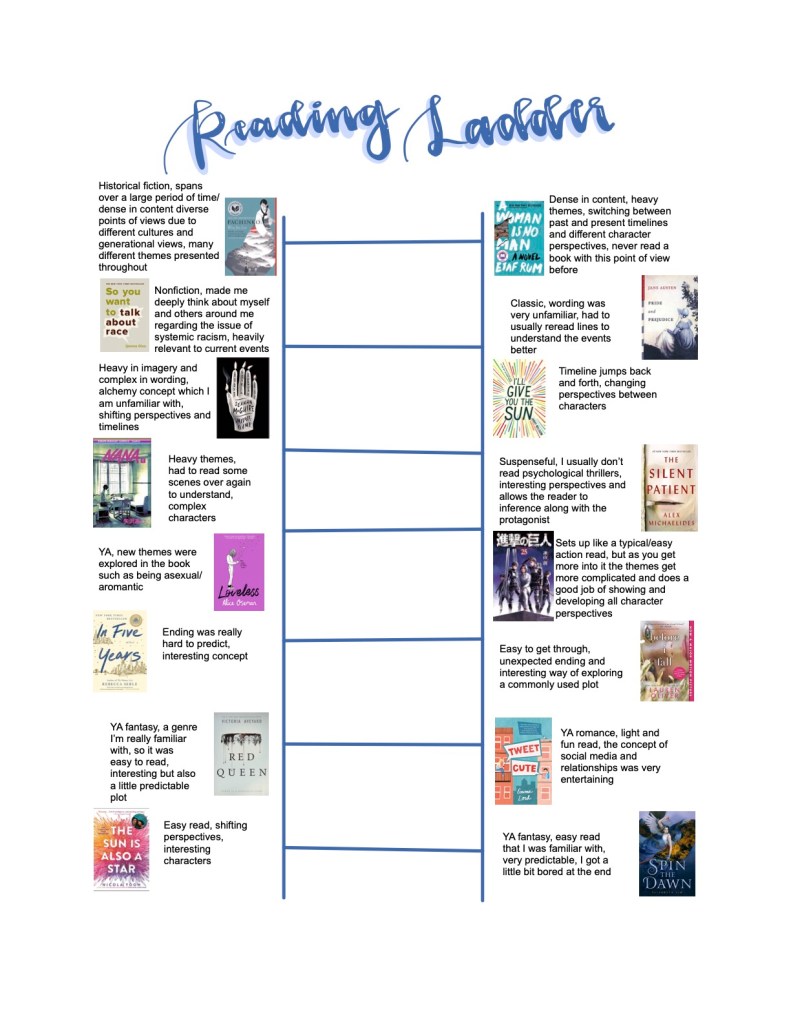
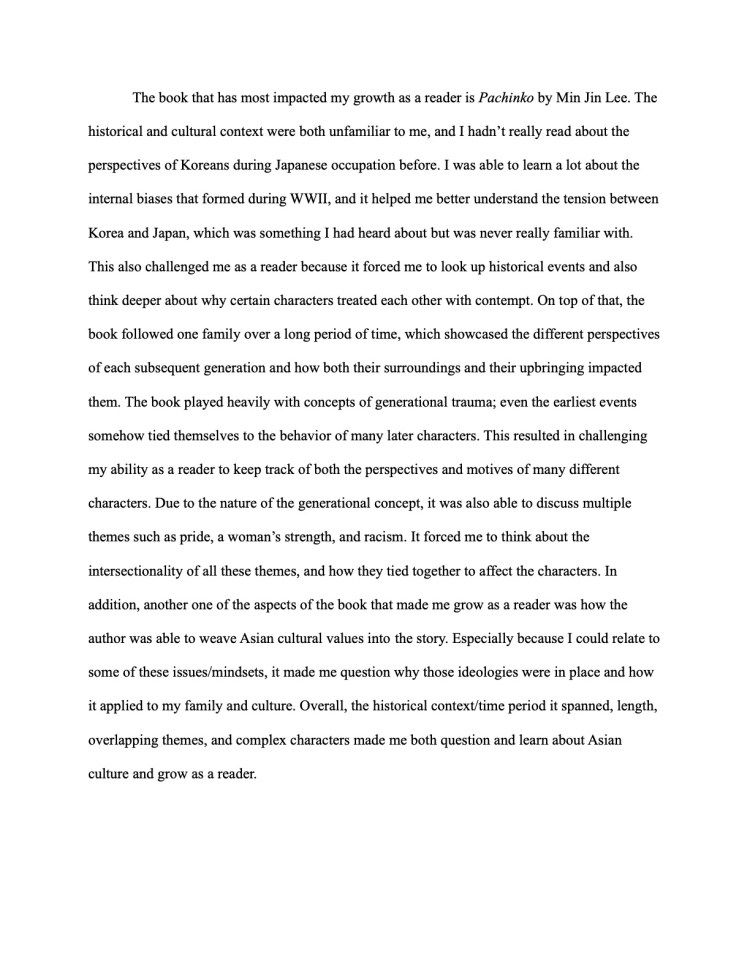
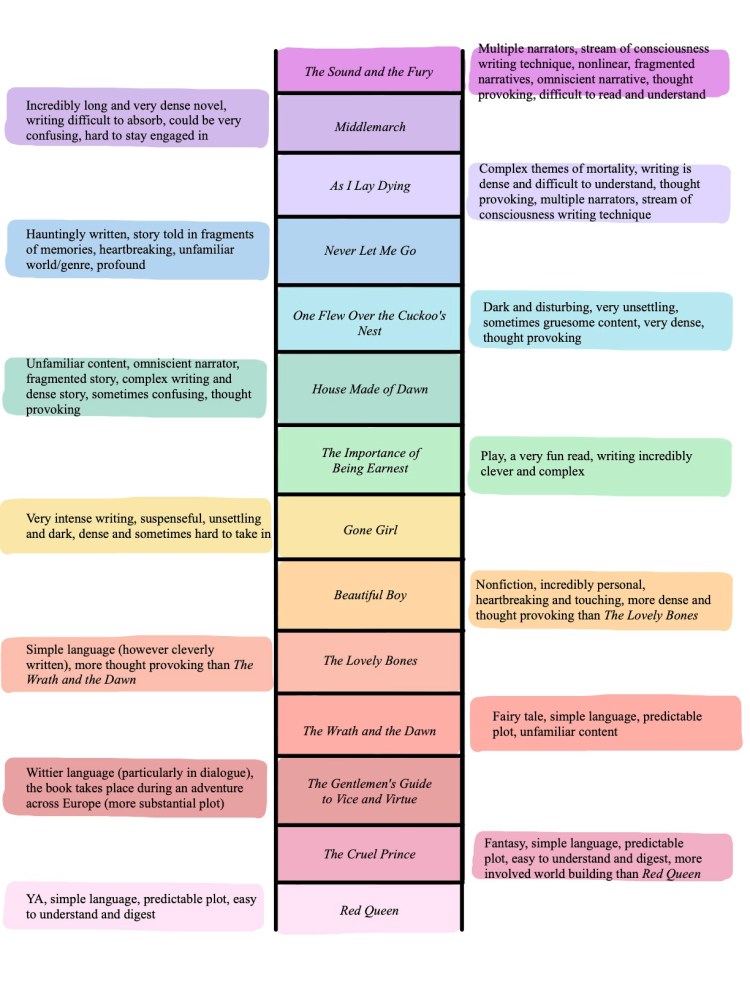
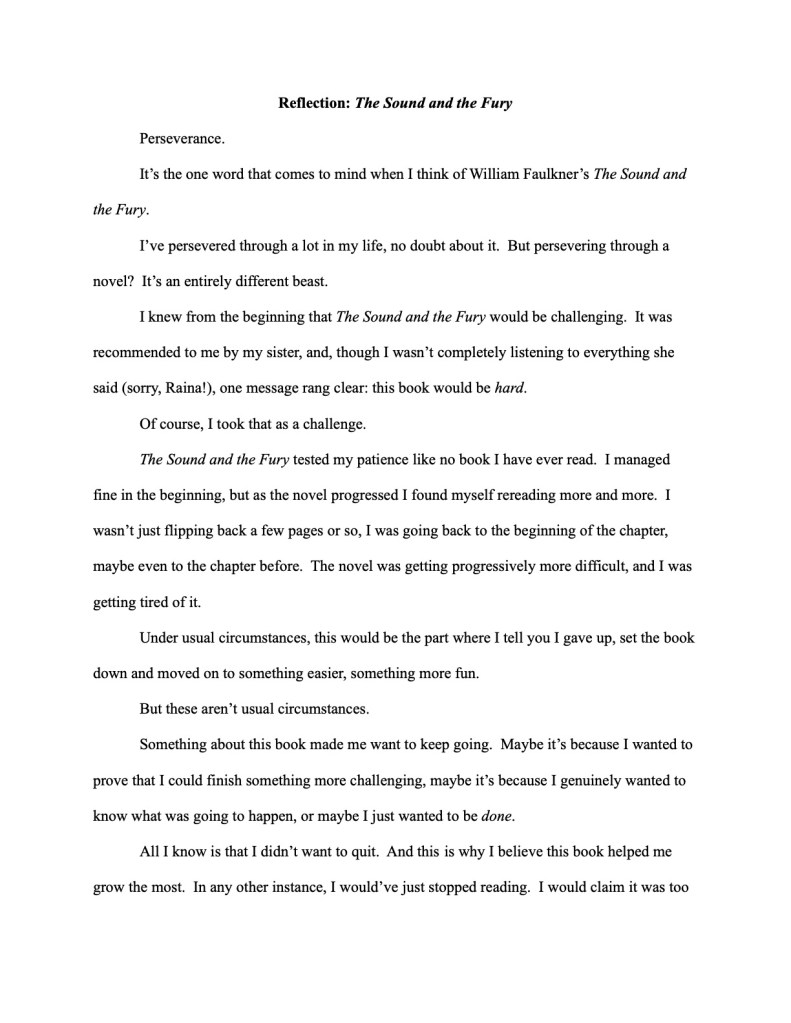
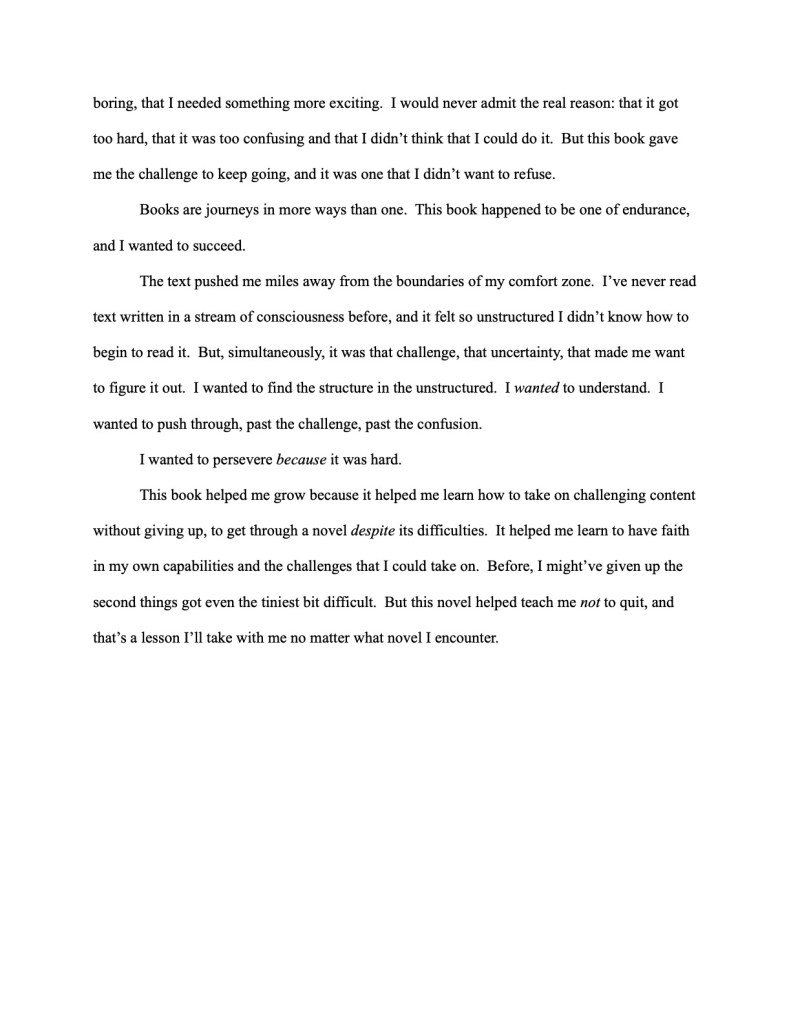
Speaking of Penny Kittle, she has a brilliant assignment that she calls a Reading Ladder. She has examples of assignment sheets on her website, but the basic idea is to have students organize the books they read from least to most difficult and to include a rationale for their choices. I suggest spending some time in class discussing the different ways in which books can be challenging (length, vocabulary, genre, content, structure, etc.). I did this assignment after the first semester. In addition to the ladders, I asked my students to write a reflection about the book that had the most impact on their growth as readers and HOW it changed them. Here are two examples from my AP Language class:
- Flipgrid favorites
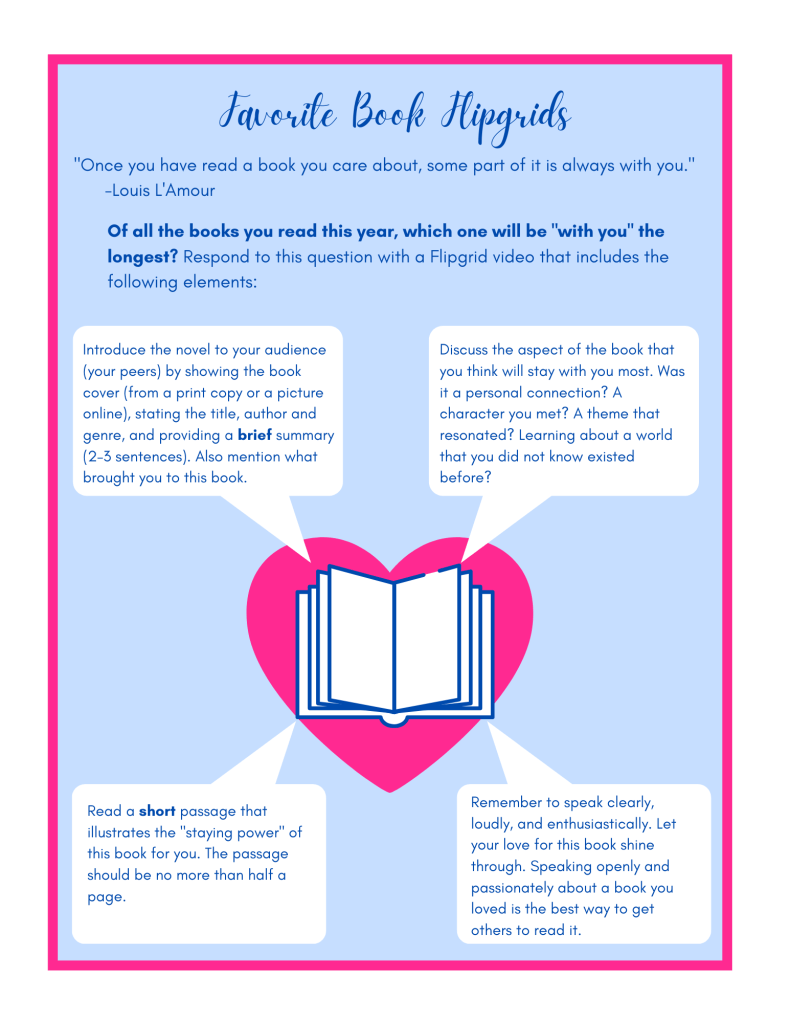
One of my colleagues is working on a video celebration project because, as she says, “They’re just so cute when they’re talking about books they loved. They get so excited.” I love this. I know that whenever I hear someone talk about a book they enjoyed, I get excited about it, too. All it takes is an enthusiastic tone and someone saying, “This was a great book,” and I put it right on my Goodreads list.
Together, we developed the assignment below. You can download a free copy here. I’ve included a page with blank space for you to add your own directions.
- My Unputdownables
A few weeks ago, a colleague asked for some help getting independent reading going. She doesn’t read much YA, so she needed some recommendations. I said, “My students can help.” I made a Google sheet and invited all my students to recommend their “unputdownables” from the year on this list. They added brief descriptions and linked Goodreads’ summaries.
As an end-of-year celebration, I want to take this one step further and turn it into a shared slideshow: something my present and future students can use to find next reads. Something my students can look back on to remember this crazy year where, in spite of all the obstacles, we managed to build an amazing community of readers.
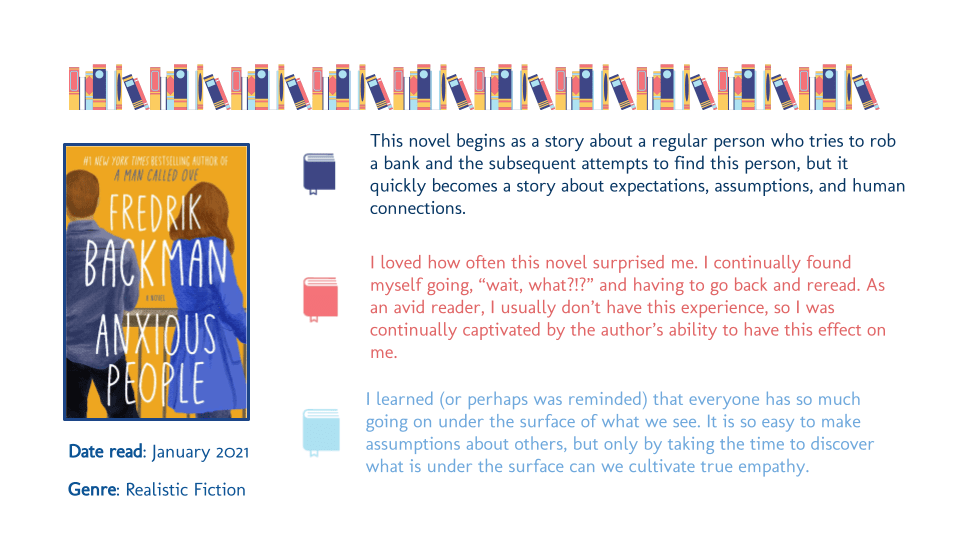
Here is a slideshow template you could use. Or you could invite students to design their own slides and add them to a slideshow that you have already started and shared. The image on the right is an example of a slide my student created of books she read third quarter.
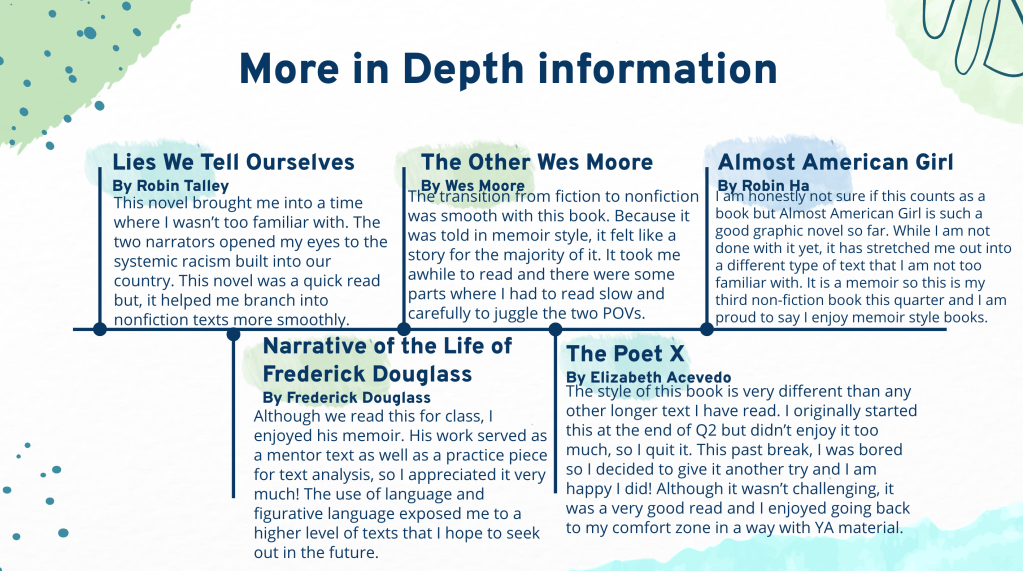
Give the students editing access if you want them to add the slides themselves. If you’re not comfortable with that, have them submit the slides separately, and you can add them and share it as a viewable slideshow.
- My Year in Books Reading Portfolio
This one was designed to encourage the students to reflect on their year of reading: how they grew as readers and as people through the books they read and the goals they set. I’ve designed it as a slideshow with one slide per book, but this could be adapted in many ways. (Get your own editable copy here.) You could ask the students to think about different ways to group the books and make shelves for each grouping (with each shelf being a slide). You could also ask them to design their own slideshow based on whatever parameters you want to set. I like the idea of inviting them to think about how each book changed them.
- #summerreadinggoals
Finally, what better way to celebrate a year of reading than to think about all the delicious books we’ll have time to read over the summer? Keep the momentum of your independent reading program going by inviting the students to set summer reading goals. I can think of so many fun ways to do this. Students could make their own slideshows, or you could do one large shared slideshow for an entire class.
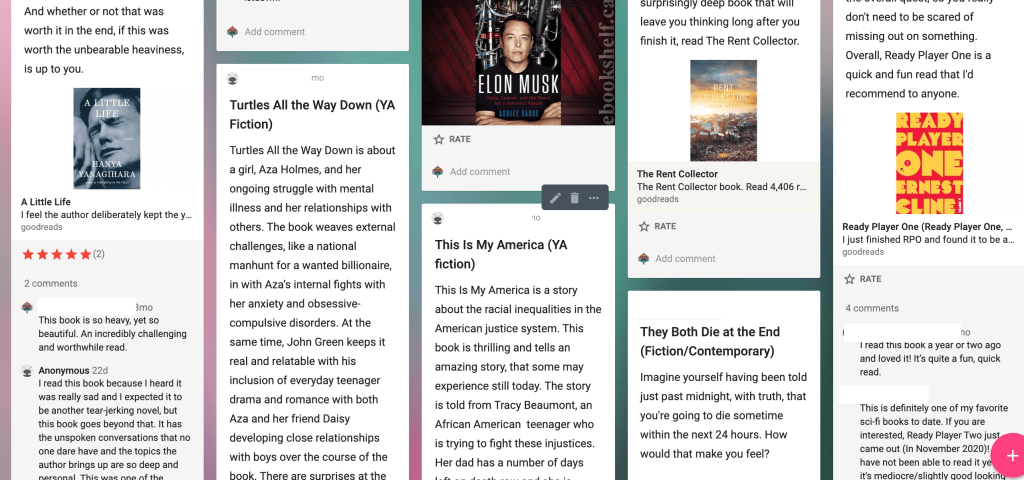
Another idea is to make a #summerreadinggoals Padlet. All year long I encourage my students to add their favorite books to a Padlet board that is shared among all of my classes, and they love doing this! They take pride in contributing something to a wider audience, and they enjoy sharing books with each other. With Padlet, it’s also really easy to add links. (My students link to summaries on Goodreads, which automatically imports an image of the book cover). And they can interact by leaving comments on each other’s posts. The basic version of Padlet is free.
If you use any of these ideas, I would love to hear about how it went. Feedback helps all of us become better!
 Ms. Hastings
Loved this! Could you maybe do a play by play of your implementation of independent reading this year? I want to make time for it and prioritize it, but I don’t want to make it connected to a grade.
LikeLike
Hi Kristen, thank you for the feedback. I do plan to write a more detailed blog post about how I will be approaching independent reading this year, probably sometime in August. (We don’t go back until September.) If you would like to receive a notification when that is published, then I suggest subscribing to the blog.
In the meantime, if you are starting school earlier, here is a really quick summary:
1. Figure out YOUR main goals for the reading. For me last year, it was just to get the students loving reading again. So many of them used to enjoy reading when they were younger but sadly had that love driven out of them (unintentionally) by their English teachers who dragged them slowly through a few whole class novels with no choice reading. They also had trouble finding time for reading with their busy high school schedules. Since last year was also the crazy COVID year with a hybrid teaching model for us, I wanted them to find joy in their reading, so I kept things really simple. I did not want anything to get in the way of their reading.
2. Once I established that goal, the rest was pretty easy. I knew I wanted to encourage and coach, not drag and crush, so I helped them set goals and created a weekly check-in system to hold them somewhat accountable.
3. Introduce independent reading. (This is probably what you’re really asking about.) I have a couple of paragraphs about it in this post (https://mshastings.com/2021/06/05/laying-the-foundation-september-november-2020/). Basically, I helped them understand why independent reading is important, I taught them how to access books through our school library (we use Sora), I showed them how to sign up for and use Goodreads, I gave them lists of books by genre from Goodreads, and asked them to pick a book and start reading. I also did daily book talks on books that I had read and thought some of them might be interested in. (Near the end of the quarter, I had them take those over, and I did them only occasionally.)
4. Follow up regularly. I set the general goal of having them read 2–3 hours/ week for independent reading. I asked them to report every Monday on what they read and how much time they spent reading, then I recorded this in our LMS (in the comments section; they did not receive points for this). If they were falling under the 2 hour mark, we talked about why and tried to set small goals to increase stamina. We also worked as a class on a reflection assignment about finding more time for independent reading. I also held reading conferences abut once a quarter. It was really hard to do through Zoom (so much time was wasted creating breakout rooms, moving kids around, losing them due to Wifi issues) that I found it challenging to have more than one per quarter, but my goal is to do two per quarter this year. As far as grades went, they had to reflect on their independent reading each quarter and factor that into their quarter grades. They did not receive points on any assignments in my class last year. Each quarter they set new goals based on their progress the previous quarter.
That’s basically it. If you haven’t read Book Love by Penny Kittle, I highly recommend it.
The independent reading was probably the highlight of the year for most of my students, so I don’t think I will change too much, but I do want to build in some more structure around reading growth since this is the main way that my students read. I will have more information on all of this in a future post.
Thank you for reaching out! If you have additional questions, feel free to ask here or reach out to me on FB messenger if that’s easier. You can find me here: https://www.facebook.com/mindfulenglishteacher
LikeLike