

I have dreaded writing this post because the fall was so overwhelming. The details blur together like I am viewing them underwater. I remember feeling that we were not making much forward progress, our shoes getting stuck in the mud of hybrid learning. I was trying to teach my students to develop reading lives, to write freely in their notebooks, to unlearn all the damaging behaviors that traditional grading had taught them. But so much of that time was eaten up by everything that I had to learn: where to put the devices to maximize audibility for at-home learners; how to efficiently create breakout room groups with minimal audio interference; how to adjust these groups when a student switched from hybrid to remote (which happened at least once a week for the first semester or so).
For those first few months, whenever I felt overwhelmed or frustrated, I took a deep breath and reset my intention. I kept returning to my primary goal: trust. In order for the gradeless system to work, the students had to trust me. In order to create a classroom culture of sharing and feedback, they had to trust each other. So I kept our learning goals achievable. We would spend time figuring out who we were as readers, writers and learners to create a foundation to build upon the rest of the year.
Here is an overview of the work we did:
We began unlearning traditional grading. On the third day of school, we read this excerpt from “The Case Against Grades” by Alfie Kohn. The students annotated their thoughts in the margins, and then I put them in breakout rooms to discuss those annotations. Most students connected their experiences with grades—being overly stressed, cramming for a test and forgetting everything immediately after, even cheating—with Kohn’s claims. By the end of the period, they were open to trying something different in my class this year. (I adapted this idea from Point-less.) The next day I shared the course learning goals and more specifically described the way I would be assessing student work and determining quarter grades.
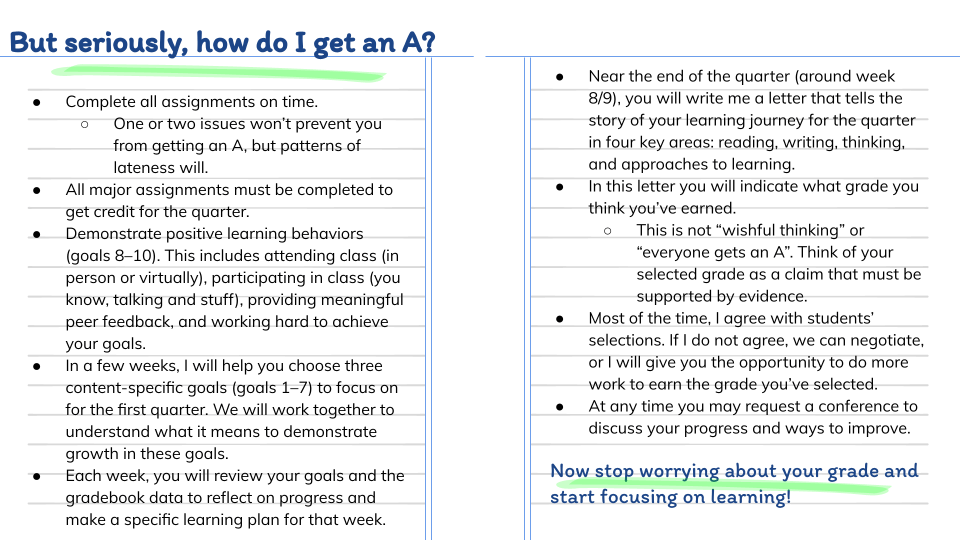
We tried to create a class community that expanded beyond our four walls. With more than half of my students learning from home on any given day, this was (and honestly continues to be) the most challenging part of the school year. The getting-to-know-you activities at the beginning of the year could only take us so far. Putting students in breakout rooms for a quick pair share rarely felt worth the effort.
I developed the concept of “screen squads” from the learning pods that Zerwin describes in Point-less. These were by far the most valuable community-building activities. Squad members got to know each other by creating #squadgoals. These static groups became peer feedback circles and informal book clubs. Whenever I wanted students to have a small group discussion, I asked them to get into their squads, which definitely streamlined the breakout room process. Although I am cautiously optimistic that I can remove the “screen” from squads next year, these small learning groups will still be a foundational part of all my classes.
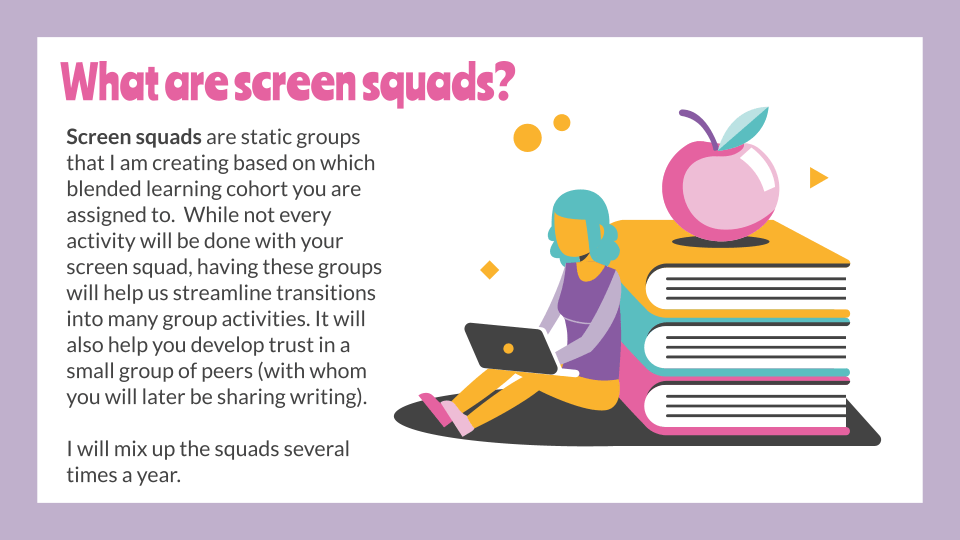

We began reflecting on our reading habits and developing reading lives. For most of my teaching career, I tried and failed to implement an independent reading program. The failure stems from two causes: 1) The students did not have enough time to read both the texts I assigned and the texts they chose. 2) I did not have enough time to grade the assessments that I thought I had to give to make sure they were reading independently. Sigh. But once I decided not to give traditional grades anymore, I went all in on independent reading. I read Book Love by Penny Kittle and more or less adopted those practices: frequent book talks, reading logs to record titles and times, and reading conferences to assess progress. Though not perfect, the community of readers that I built with my students this year is by far my favorite accomplishment.
This process began with some data and discussion about why reading matters. The students completed a reading survey to help me get to know them as readers. I taught them how to use Goodreads and Sora. I gave daily book talks and eventually invited the students to do their own. It took a few weeks to get the reading going, but it was probably the best time investment I have ever made.
We developed a regular notebook writing practice—with emphasis on the practice. Of all the balls I tried to juggle this year, notebook writing is the one I kept dropping. I love the idea. But after the first quarter, I struggled to find time for it during class. I encouraged students to write on their own, but this was difficult for them to maintain and for me to assess. A few students were successful in making their notebooks their home base. Many shared that regular notebook writing helped them relieve stress. Next year (when the students are hopefully attending school in person), I will work to make the notebook more of a core course feature.
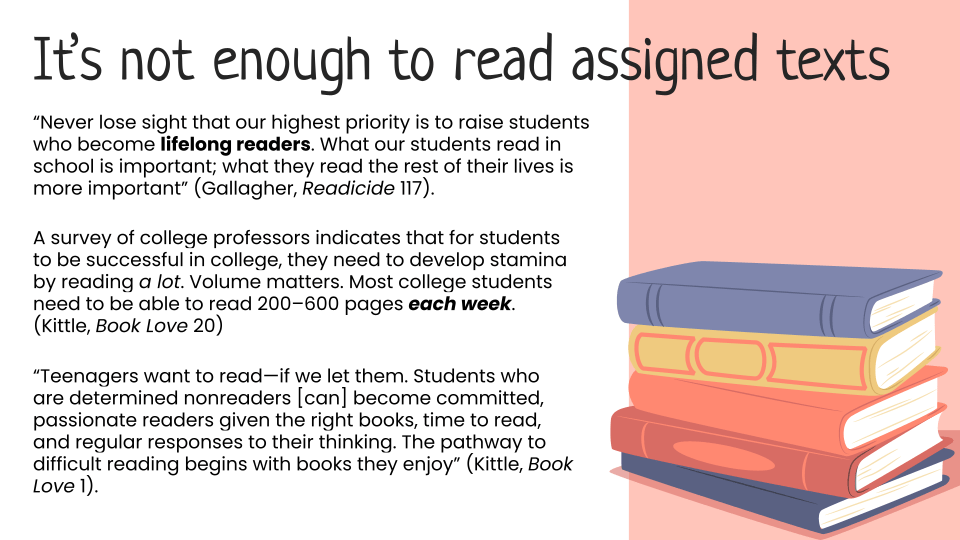
I had also intended to borrow a mid-quarter lesson series from Zerwin about the differences between learning and getting good grades, interpreting the course goals, and setting individual goals. But by the time I got all the other stuff done, the quarter was almost over, and it seemed silly to have them select their own goals at that point. Returning to my intention of building trust and minimizing stress, I kept the first quarter reflections really simple. Here is the assignment sheet I gave my students. I expected them to include concrete details and evidence in their responses. Most of them did this. While I did not love this assignment, it was a good start. But I was already planning something a little more rigorous and reflective for quarter 2.
Once I started reading through the reflections, I decided it would be helpful to calibrate our expectations. I did not want to give students a list of things they “had” to do to earn an A because I thought this would undermine the gradeless philosophy. But there were also things I expected them to do if they wanted an A. So I created a Google form with hypothetical student profiles. We decided what grade each of these imaginary students ought to earn. After this lesson, several of my students went back and revised their quarter reflections. I did not need to do the calibration assignment any other quarter, but I think I will use it every year around the middle of the first quarter. Here is an example of one of the questions and the students’ responses.

This foundation was for my students, but it was also for me. I had to start somewhere, and I had to keep it simple enough that I wouldn’t give up.
If you’re overwhelmed by the idea of transforming your assessment practices, then you’re in the right place. It IS overwhelming—and liberating and exhilarating and life-changing. The good news is that you don’t have to do it all at once. You don’t need all the answers when you begin. Trust in yourself and your values enough to know that you’re doing the right thing at each moment. Come back to your intention. One breath at a time.
 Ms. Hastings